
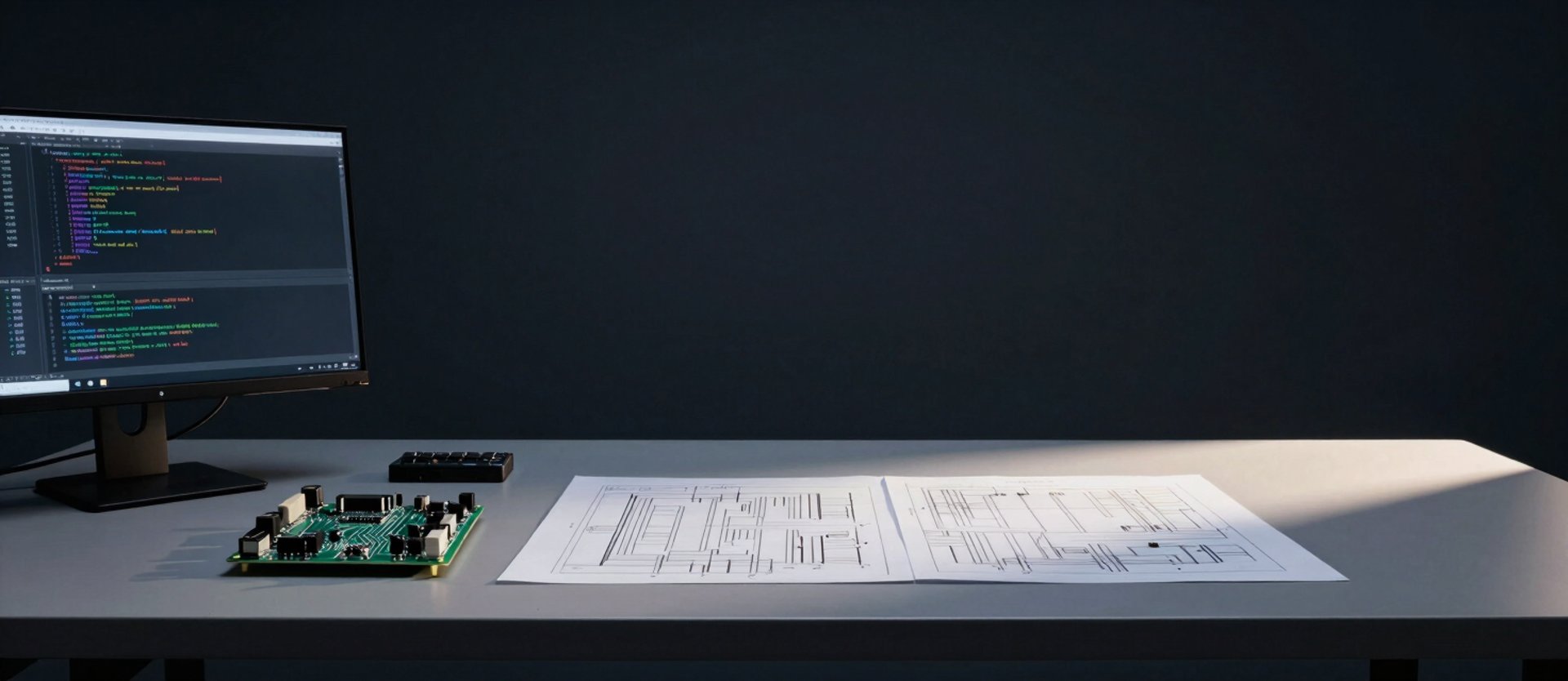
Built where software meets the physical world
Most teams optimize each layer independently. We're structured to hold both layers accountable — from architecture to assembly, under one roof.
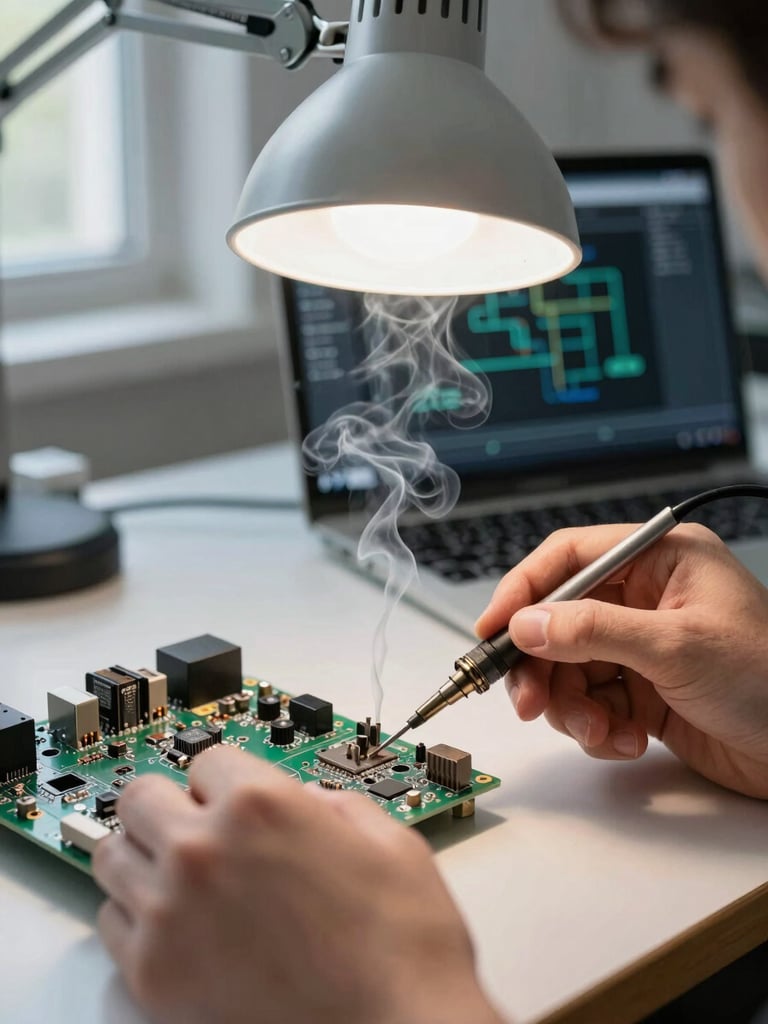
The seams are where projects fail
Every team that splits software work from hardware work pays a coordination tax — delayed handoffs, mismatched assumptions, integration bugs that surface late. Master Mynder was built to eliminate that gap.
We took on cross-domain engagements deliberately, not by accident. The structure followed the work — practitioners who could hold both ends of a problem without losing resolution at either.
Specialists who practice across domains
Every practitioner in the collective holds deep expertise in their domain. What makes them unusual is that they've also worked the adjacent layer — the firmware engineer who understands UX constraints, the product designer who reads schematics.
Single accountability from scoping to delivery. One contact who understands why your API matters to the button your user presses — and can act on both.
See where your problem fits
Scope calls are free — no pitch, just your problem. Start by reviewing what we cover, then reach out when you're ready.